

 Facebook
 X
X
 Pinterest
 Copy Link
The Quiet Policy Shift That Will Redefine Real Estate in 2026
Most turning points in our industry arrive without fanfare. This week was one of them.
While it never made the front page of the national news cycle, the National Association of REALTORS® (NAR) approved changes that will shape how real estate is practiced long after the headlines about commission lawsuits fade.
And unlike past policy shifts, this one places a new degree of power — and responsibility — directly into the hands of local MLS operators.
- MLS Access Rules Are No Longer a National Mandate
On November 17th, NAR updated its MLS Handbook, removing the long-standing requirement that MLS participants must be REALTOR® members.
Going forward, each local MLS may decide its own membership and access criteria.
Why does this matter?
Because for decades, MLS participation and REALTOR® membership were functionally tied together. Now that tie is optional rather than automatic.
Some markets will likely preserve the existing model. Others may open the MLS to non-REALTOR® licensees, tech firms, or other service providers. How this plays out will vary dramatically depending on local governance, competition, and political culture.
But the bottom line is clear:
Associations will need to provide visible value to keep practitioners engaged. Membership becomes earned, not assumed.
- Compensation Transparency Is Becoming a Permanent Expectation
At the same meeting, NAR moved forward on proposed changes to the Code of Ethics designed to increase disclosure around referral fees and dual compensation. Although the Delegate Body paused adoption for now, the direction of travel is unmistakable.
The Department of Justice has repeatedly emphasized — both in its public filings and in its communications with NAR — that greater visibility into real estate compensation structures is essential. Class-action plaintiffs argued the same.
So whether these particular rules passed or not, the trend is obvious:
Clarity around who pays what, and why, is no longer optional. It is becoming a professional standard.
Agents who can quickly and confidently explain their value proposition will thrive. Those who can’t will struggle in an environment where consumers are more informed — and regulators more attentive — than ever.
- The Real Divide in the Industry Isn’t About Production Volume
A subtle shift is happening, and it has nothing to do with “top producers” versus everyone else.
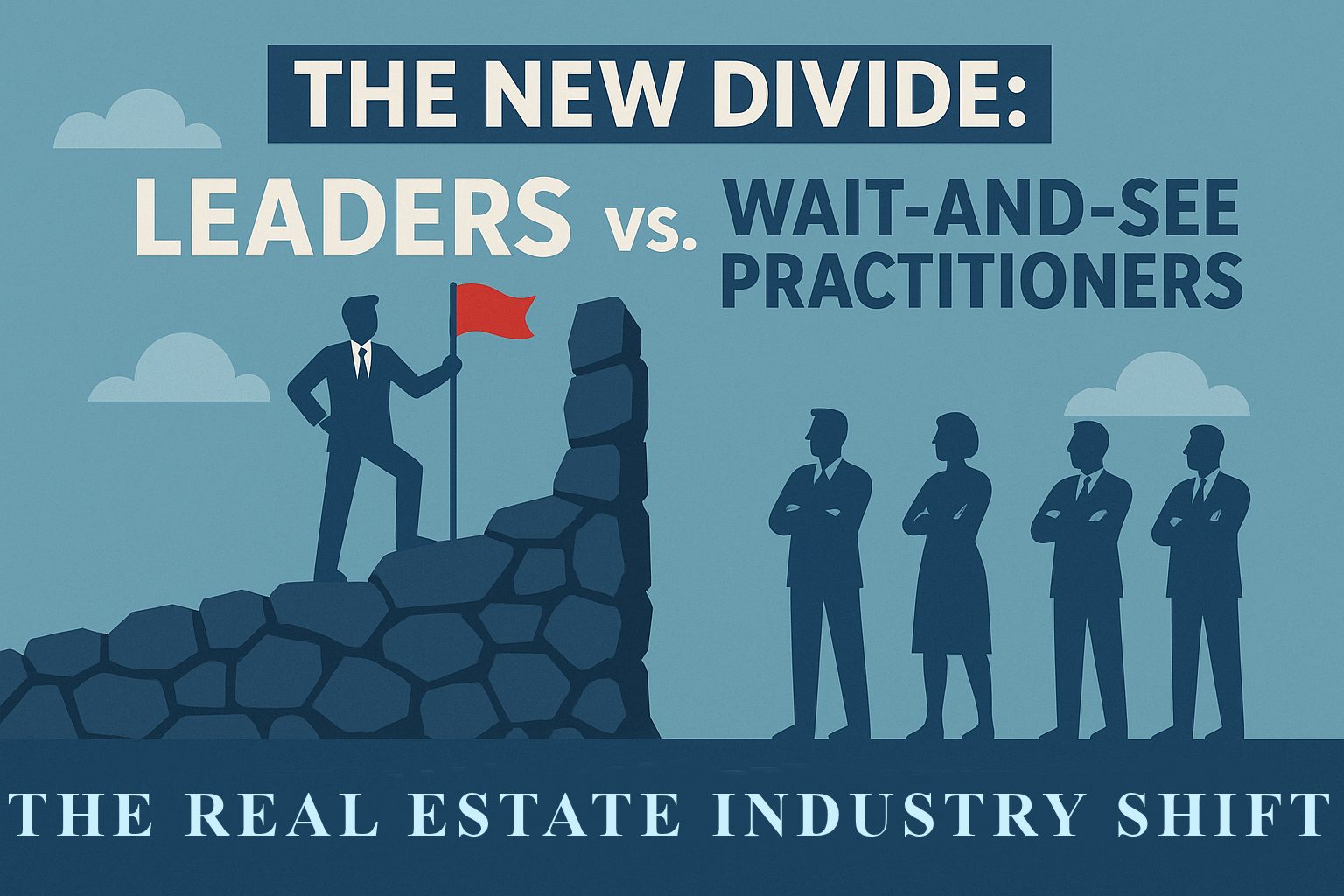
The divide now forming is between practitioners who adapt and practitioners who wait for someone else to interpret the changes for them.
I see two emerging groups:
The Builders
These are the professionals who:
- Refine their buyer consultations and listing presentations
- Proactively explain their compensation structure
- Communicate consistently with their sphere about what’s changing
- Lead with clarity in moments when consumers feel confusion
Builders shape the market.
The Bystanders
These are the agents who:
- Wait for perfect certainty
- Rely on old scripts
- Avoid conversations about fees
- Hope consumers aren’t asking questions
Bystanders react to the market.
- What Real Estate Pros Should Do Right Now
Here are three practical steps to stay ahead of the curve:
📌 Update Your Consultations and Presentations
Add a simple, clean explanation of:
- How agent compensation works
- How representation benefits the consumer
- How transparency reduces risk
This isn’t just defensive — it’s an opportunity to emphasize value.
📌 Get Clarity From Leadership
Every agent and brokerage should be asking:
“What is our strategy if the MLS and REALTOR® membership become fully separate in our region?”
If leadership can answer confidently, you’re in good hands.
If not, the market just gave you important information.
📌 Communicate With Your Clients — Calmly and Proactively
A brief email, market update, or video goes a long way:
“There are a few industry updates happening behind the scenes. Here’s what’s changing, what’s staying the same, and how I continue to protect your interests.”
You don’t need to unpack every rule change.
You simply need to be the steady voice your clients trust.
- Adaptation Is Now a Professional Skillset
The legal landscape is shifting.
Consumer expectations are rising.
Regulators are watching.
But more importantly, this moment is creating room for professionals who lead with clarity, integrity, and competence.
The question facing every agent — and every brokerage — is simple:
Are you shaping the next era of real estate, or waiting for someone else to define it for you?


